Ongoing Projects:
Contested Cross-border Spaces, Illicit Flows, and Order in the Contemporary World
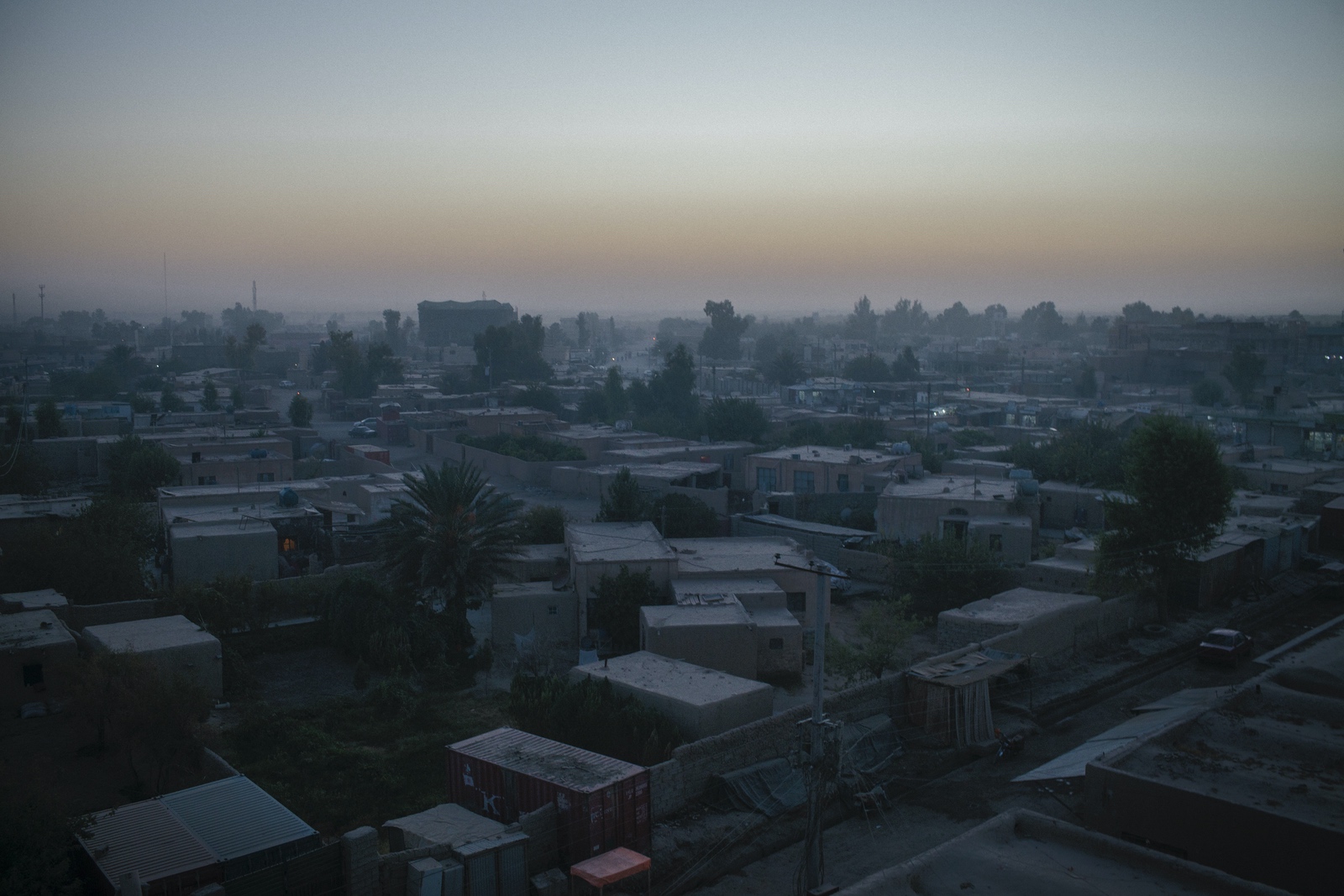
Bringing together cutting-edge social science with innovative complexity science, this project establishes a comprehensive framework that cuts across multiple geographic scales to demonstrate under what conditions and how governance dynamics in borderlands facilitate licit, illicit, and informal flows and networks and how these relate to the emergence of cross-border drivers of conflict and peace and their effects on regional stability, livelihoods, and global order and security.
Here are some highlights of my work:
Completed Projects:
The Global Security Programme: Contested Cross-border Spaces, Illicit Flows and Order in the Contemporary World
Funded by the Minerva Research Initiative (Principal Investigator)

The Global Security Program led by Annette Idler has been awarded a grant by the US Department of Defense as part of their 2021 Minerva Research Initiative.
The Global Security Program: Contested Space, Illicit Flows, and Order in the Contemporary World will receive $3.5m over the next five years to investigate “how and under what conditions governance arrangements among violent non-state actors and state actors in contested cross-border spaces emerge, shift, and eventually catalyse global security threats via global illicit supply chain networks”.
The Changing Character of Conflict Platform: Understanding, Tracing and Forecasting Change across Time, Space and Cultures
Funded by AHRC/ESRC (Principal Investigator)
The Changing Character of Conflict Platform, funded by the Arts and Humanities Research Council and the Economic and Social Research Council’s Partnership for Conflict, Crime and Security Research, was administered by the Department of Politics and International Relations, University of Oxford from 1 January 2017 to 31 December 2021, with a large interdisciplinary and international team (see People). Thanks to further generous funding from the Arts and Humanities Research Council, in 2022 we add to this with the “Network for Change: Building on the Changing Character of Conflict Platform”, administered by the Department of International Development, University of Oxford.
Transitions and Social Cohesion in Contexts of Multiple Crises
Funded by the OX/BER Initiative (Principal Investigator, with Sérgio Costa)
GSP is expanding its successful cooperation with Freie Universität Berlin’s Institute for Latin American Studies.
Together with Professor Sérgio Costa and Dr Jan Boesten, the CONPEACE team has set up a cooperation group of the Berlin University Alliance/University of Oxford Centre for Advanced Studies (Grand Challenge Initiative Social Cohesion).
The team of researchers involved will be examining social cohesion in the everchanging contexts of multiple crises occurring globally with a particular focus on the broader region of Latin America and its borderlands. New survey experiments are being produced in Colombia, Venezuela, and Trinidad & Tobago primarily focusing on understandings of contexts influenced by factors such as the COVID-19 pandemic, refugee crises and drug cartels. This research will allow for broader generalisations to be drawn regarding the global context of other refugee crises in cross-border areas such as Afghanistan, and Myanmar.
From Conflict Actors to Architects of Peace: Promoting Security and Development across Borders
Funded by Canada Global Affairs (Principal Investigator)
The CONPEACE (“From Conflict Actors to Architects of Peace”) Programme is an interdisciplinary research programme that studies changing security landscapes in the context of cross-border violence and transitions from war to peace.
We shed empirical and theoretical light on diverging experiences, perceptions, and conceptualizations of security, ranging from citizen security, to national security and global security. Our research illuminates and narrows the gap between power centres’ and marginalised communities’ vision of security. We further analyse how these differing visions of security can be reconciled, and how security architectures and related institutional arrangements need to be adapted in order to adequately anticipate and respond to changing security landscapes from a people-centred perspective.
From Conflict Actors to Architects of Peace: Justice, Peace, and Politics in the Creation of a Lasting Peace in Colombia’s Marginalised Regions
Funded by the Oxford-Berlin Research Partnership Seed Grant (Principal Investigator, with Sérgio Costa)
In 2016, the Colombian government and the country’s largest rebel group, the Revolutionary Armed Forces of Colombia—People’s Army (FARC) signed a remarkable peace deal. It ended the longest-running armed conflict in recent global history that left more than 220,000 people dead and about 6.7 million displaced. Achieving sustainable peace, however, remains a major challenge. The Ejército de Liberación Nacional (ELN), the country’s second largest guerrilla group, continues its fight against the government. Multiple other violent non-state groups operate in Colombia as well, many of them involved in the illicit drug trade and other forms of transnational organised crime. The cross-border effects of the unstable situation in neighbouring Venezuela further contributes to the complexities of a successful transition from war to peace.
Negotiating with Armed Actors: Peace Communities in Colombia
In collaboration with Cécile Mouly and Belen Garrido, FLACSO Quito
Beyond the War on Drugs: The International Drug Control Regime in the 21st Century
In collaboration with Juan Carlos Garzón, Woodrow Wilson Center
From Conflict Actors to Architects of Peace: Changing Security Landscapes Viewed from the Margins
Funded by the UK Global Challenges Research Fund, Higher Education Funding Council for England (Principal Investigator)
From Conflict Actors to Architects of Peace: Promoting Human Security in Colombia and Internationally
Funded by the Foreign and Commonwealth Office (Principal Investigator)
Implementing a Ceasefire and Ending Armed Conflict: How to enhance human security and cross-border development in Colombia, Ecuador and Venezuela
Principal Investigator, in collaboration with UN Colombia
Putting Frontier Research into Action: Tackling Violent Non-state Groups in Peripheral Spaces
In collaboration with UN Colombia and the UN System Staff College
Towards Sustainable Peace in Colombia and the World: A Critical Perspective on Army Transformation
Dynamics of War and Peace: Drama, Poetry, Music and Dance
In collaboration with Rama Mani, Theatre of Transformation)
 Annette Idler
You must be logged in to post a comment.